
Choosing the Right Fabric for Performance Sportswear: GSM, Composition & Durability Explained
In performance sportswear, design attracts attention — but fabric determines performance.
Many emerging brands focus heavily on graphics, logos, and marketing while underestimating the importance of fabric engineering. However, GSM, fiber composition, knit structure, and durability testing directly impact comfort, breathability, and long-term product reputation.
For private label brands and teams developing custom apparel, understanding fabric specifications is essential for making informed manufacturing decisions.
This guide explains the technical foundations of sportswear fabrics and how professional OEM manufacturers approach fabric selection.
What Is GSM in Sportswear?
GSM stands for Grams per Square Meter, a measurement that indicates the weight and density of fabric.
It directly influences:
•Thickness
•Breathability
•Opacity
•Durability
•Comfort level
Common GSM Ranges in Sportswear
•120–140 GSM → Lightweight match jerseys
•150–170 GSM → Standard teamwear
•180–220 GSM → Training wear & durable uniforms
•240+ GSM → Hoodies & winter sports garments
Lower GSM fabrics feel lighter and more breathable but may sacrifice durability. Higher GSM fabrics offer structure and longevity but can reduce airflow.
Choosing the right GSM depends on sport intensity, climate, and brand positioning.
Fabric Composition in Performance Apparel
The fiber blend used in sportswear determines stretch, moisture control, and recovery.
1. Polyester (100%)
The most common performance fiber.
Benefits:
•Lightweight
•Moisture-wicking
•Durable
•Ideal for sublimation printing
Polyester fibers resist shrinking and maintain shape over time.
2. Polyester-Spandex Blends
Often used in compression garments and fitted jerseys.
Benefits:
•Enhanced elasticity
•Better movement range
•Improved recovery
•Body-contouring fit
Spandex content typically ranges from 5%–15%.
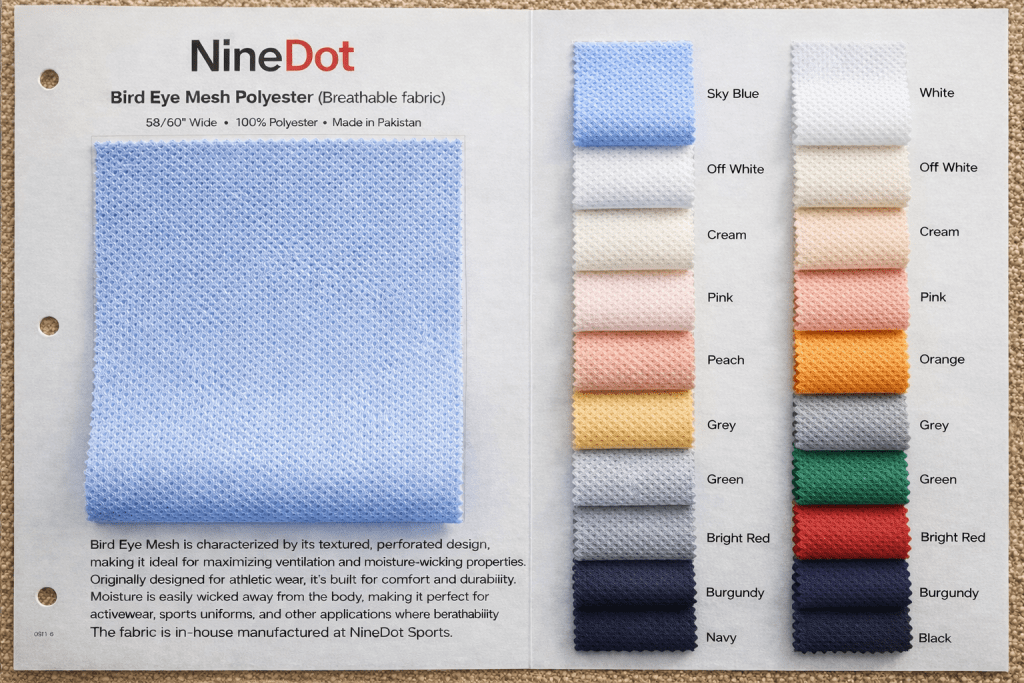
3. Polyester Mesh
Engineered with micro-perforations for ventilation.
Ideal for:
•Basketball jerseys
•Summer football kits
•High-intensity sports
Mesh increases airflow without significantly increasing weight.
4. Interlock Knit Fabric
Interlock is a double-knit construction providing:
•Smooth surface
•Excellent sublimation print clarity
•Balanced stretch
•Professional finish
It is widely used in international teamwear programs.
5. Microfiber Performance Blends
Advanced microfiber fabrics offer:
•Soft hand feel
•Enhanced sweat evaporation
•Faster drying times
Premium brands often choose microfiber blends for higher retail positioning.
Knit Structure & Gauge Explained
Beyond composition and GSM, knit gauge plays a crucial role.
Gauge refers to the number of needles per inch on a knitting machine.
For example:
•28 gauge → Balanced durability and breathability
•32–36 gauge → Smoother surface, finer texture
•Higher gauge = tighter knit structure
Higher gauge fabrics:
•Improve sublimation clarity
•Offer softer touch
•Enhance moisture distribution
At NineDot Sports, fabric gauge selection is aligned with printing requirements and sport-specific performance standards, ensuring the fabric supports both design and durability goals.
Moisture Management & Breathability Engineering
Performance apparel must regulate body temperature efficiently.
Key fabric performance metrics include:
1. Moisture-Wicking
Hydrophobic polyester fibers pull sweat away from the skin and disperse it across the surface for evaporation.
2. Air Permeability
Measured in airflow testing, this determines how easily air passes through fabric.
Mesh panels improve ventilation in high-heat zones such as:
•Underarms
•Side panels
•Back panels
3. Quick-Dry Capability
Advanced finishes allow garments to dry rapidly after washing or intense activity.
Proper fabric engineering enhances athlete comfort and performance consistency.
Durability Factors in Teamwear
For team uniforms and academy programs, durability is critical.
Key durability tests include:
Seam Strength Testing
Ensures stitching withstands repeated stretching.
Color Fastness Testing
Prevents fading from sweat, UV exposure, and washing.
Anti-Pilling Testing
Reduces fabric surface fuzz after friction.
Shrinkage Control
Prevents dimensional change after washing.
Professional OEM factories implement pre-production and post-production testing to maintain quality standards.
At NineDot Sports, fabric batches undergo inspection before bulk cutting to maintain consistent performance across production runs.
Fabric Selection by Sport Type
Different sports require tailored fabric strategies.
Soccer & Football
•140–160 GSM
•Polyester interlock
•High breathability
Basketball
•Mesh fabric
•150–180 GSM
•Enhanced airflow
Rugby
•Higher GSM
•Reinforced stitching
•Stronger knit structure
Esports
•Lightweight polyester
•Smooth finish for retail appearance
Training & Gym Wear
•Polyester-spandex blends
•Stretch-focused construction
Matching fabric to sport ensures product credibility and customer satisfaction.
How Professional OEM Manufacturers Test Fabric
Technical fabric evaluation separates professional manufacturers from generic suppliers.
A structured OEM testing approach includes:
1.Fabric inspection before cutting
2.Shrinkage and wash testing
3.Color fastness testing
4.Stretch recovery assessment
5.Sublimation heat tolerance testing
These evaluations prevent costly production errors and reduce return rates.
At NineDot Sports, fabric consultation is integrated into early-stage product development, allowing brands to align performance goals with technical fabric specifications.
Final Considerations Before Selecting Fabric
Before approving fabric for bulk production, brands should ask:
•Does GSM match climate and sport intensity?
•Is fabric composition compatible with printing method?
•Has shrinkage testing been completed?
•Does fabric support long-term durability?
Fabric selection is not just a technical decision — it directly affects brand reputation.
Conclusion
Performance sportswear begins with fabric engineering. GSM, composition, knit gauge, and durability testing all influence how a garment performs in real conditions.
Brands that understand these technical factors make smarter manufacturing decisions and avoid quality inconsistencies.
For private label sportswear programs and custom teamwear development, partnering with an experienced OEM manufacturer ensures fabric selection aligns with performance standards and brand positioning.
If you are planning a new sports apparel collection or evaluating fabric upgrades, a structured fabric consultation can help optimize your production strategy.